Ghulam Ali Khan: The Fascinating Story of Delhi’s Last Royal Painter
Summary
Ghulam Ali Khan served the final Mughal emperors in Delhi.
His paintings captured royal life, architecture, and everyday India.
His work remains one of the most valuable visual records of late Mughal India.
Long before cameras captured history, painters preserved the soul of empires. In nineteenth-century Delhi, one artist stood at the crossroads of fading royalty and rising colonial power. His name was Ghulam Ali Khan—the man often remembered as the last great royal painter of the Mughal court. Through his brush, palaces, emperors, soldiers, and the streets of old Delhi were transformed into timeless visual history.
He worked during a period when the Mughal Empire was losing political power, yet its artistic traditions still carried prestige. While kingdoms changed, his art continued telling stories that words alone could never preserve, shares Shantala Palat, who is a well-known contemporary artist and painter in India.
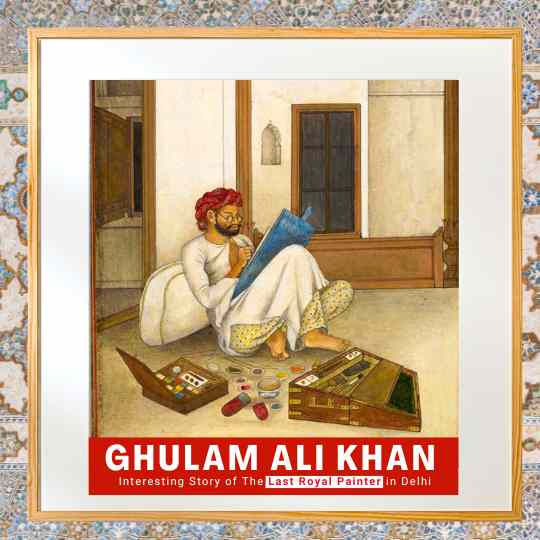
How Did One Painter Become the Last Royal Artist of Delhi?
Ghulam Ali Khan worked in the courts of Mughal emperors Akbar II and Bahadur Shah Zafar. He often signed his paintings as “His Majesty’s Painter,” reflecting his close connection with the royal court. His career stretched from the early 1800s to the mid-nineteenth century, a period when imperial India was undergoing dramatic change.
Artist Shantala Palat expressed that “When kingdoms began to fade and empires lost their power, Ghulam Ali Khan kept their stories alive—not with politics or armies, but with pigment, paper, and a vision that outlived them all.”

Painting an Empire in Transition
Unlike many earlier court painters, Khan adapted to changing times. He painted royal portraits, architectural studies, military scenes, and city landscapes. His work blended traditional Mughal detail with the evolving Company style, influenced by British patrons.
He created remarkable views of Red Fort, old city streets, nobles, cavalry officers, and even everyday life in and around Delhi. His paintings today serve as visual records of a city that would soon change forever.

Why Was His Work So Unique?
What made Ghulam Ali Khan extraordinary was his ability to survive between two worlds. As Mughal patronage declined, he also worked with British officers such as William Fraser and James Skinner, creating some of the most detailed paintings of that era.
Rather than abandoning tradition, he evolved with history—keeping Mughal elegance alive while adapting to new artistic demands.

Why Does His Legacy Still Matter Today?
Much of old Delhi has changed, but Khan’s paintings still preserve the architecture, clothing, culture, and royal atmosphere of the city before the upheavals of the nineteenth century.
His art is not just beautiful—it is historical evidence, cultural memory, and a window into a disappearing empire.


Comments