Abstract Art Explained: Why It’s So Distinctive and Powerful
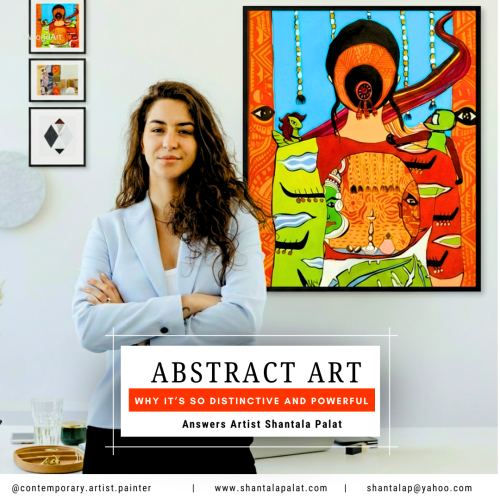
Art is often associated with realistic portraits, detailed landscapes, and carefully observed scenes from daily life. Yet not all art seeks to replicate reality. Some forms aim to express emotion, energy, and thought without relying on recognizable images. Abstract art represents this bold departure from tradition. It challenges viewers to look beyond the obvious and experience art in a more personal and interpretative way. Its refusal to conform to realism is exactly what gives it a distinctive identity and lasting impact, says Shantala Palat an eminent contemporary artist and painter in India.
What Is Abstract Art?
Abstract art is a style of visual expression that does not attempt to accurately depict the visible world. Instead of showing identifiable subjects, it uses shapes, lines, colours, patterns, and textures to communicate ideas or emotions. While certain works may be loosely inspired by real objects or scenes, they are simplified, distorted, or transformed to the point where literal representation is no longer the focus.
The essence of abstract art lies in suggestion rather than description. It encourages viewers to respond emotionally and intellectually rather than simply recognise a subject.
The Historical Shift Toward Abstraction
In the early twentieth century, artists began questioning traditional artistic rules that emphasized perspective, realism, and proportion. Rapid industrialization, scientific discoveries, and social change influenced creative thinking. Artists sought new ways to reflect a changing world.

Figures like Wassily Kandinsky explored how color and form could evoke emotional responses similar to music. Piet Mondrian reduced compositions to grids and primary colors to express harmony and balance. Kazimir Malevich experimented with bold geometric minimalism, while Jackson Pollock later introduced energetic, movement-driven techniques that emphasized spontaneity. Though their styles varied, they shared a common belief that art did not need to imitate nature to be meaningful.
Key Elements That Define Abstract Art
Abstract art relies heavily on visual elements rather than recognizable imagery. Color often becomes the central language of expression. Bright contrasts can create excitement or tension, while softer tones may evoke calmness or introspection.
Line and shape also play crucial roles. Sharp angles may suggest conflict or instability, while flowing curves convey grace and movement. Texture—whether thick layers of paint or smooth surfaces—adds another emotional dimension. Composition, balance, and rhythm guide how the eye moves across the artwork.
Because these elements operate without literal storytelling, the viewer’s interpretation becomes essential to completing the experience.

Why Abstract Art Is So Distinctive
What sets abstract art apart is its openness. In traditional painting, the subject usually provides clear direction.
In abstraction, there is no fixed narrative. Two people may see entirely different meanings in the same piece, and both interpretations can be valid.
This ambiguity is not confusion; it is intentional freedom. Abstract art invites active engagement. Instead of passively observing, viewers analyze, imagine, and reflect. The artwork becomes a space for personal connection rather than a straightforward visual statement.
Another distinctive feature is its independence from cultural or linguistic barriers. Since it does not rely on specific symbols or stories, it can resonate universally. Emotional reactions to color, balance, and movement are often instinctive and shared across different backgrounds.

The Emotional and Psychological Power
Abstract art holds remarkable emotional strength because it mirrors the complexity of human experience. Many emotions cannot be clearly defined or easily illustrated. Feelings such as anxiety, joy, longing, or confusion are layered and fluid. Abstraction captures this layered reality more effectively than literal imagery in many cases.
Dynamic brushstrokes can reflect turbulence, while harmonious compositions create a sense of peace. The absence of concrete subjects allows viewers to project their own thoughts and memories onto the work. Each viewing becomes unique, shaped by individual perspective and mood.
This psychological depth explains why abstract art often feels timeless. Its meaning evolves as the viewer changes. What resonates today may differ tomorrow, making the experience continuously relevant.
Influence on Modern Culture
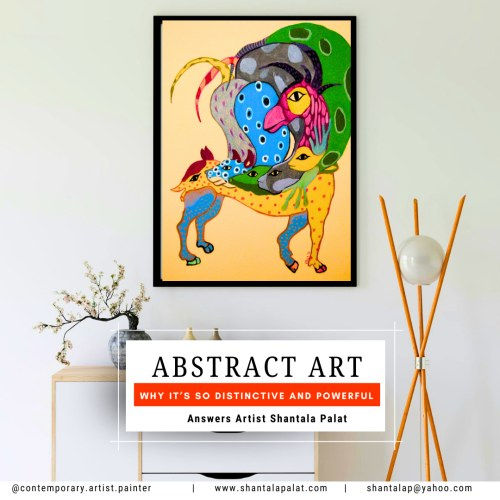
The impact of abstract art extends far beyond galleries. Its principles influence architecture, interior design, fashion, advertising, and digital media. Minimalist layouts, bold color blocking, and expressive graphic compositions all trace roots back to abstract experimentation.
By prioritizing concept and emotion over realism, abstract artists expanded the definition of creativity. They demonstrated that art is not confined to imitation but can serve as a direct channel for thought and feeling.
Abstract art remains powerful because it refuses limitation. It does not dictate a single meaning or confine itself to recognizable forms. Instead, it offers possibility—an open field where emotion, imagination, and interpretation meet. Its distinctive nature lies in this freedom, and its enduring strength comes from its ability to connect deeply with the unseen aspects of human experience.


Comments