South Indian Art Forms That Inspire Generations
South India has preserved some of the most culturally rich and visually distinctive artistic traditions in the world. These art forms are deeply connected to temples, storytelling traditions, devotional practices, and regional history. For centuries, artists have passed these techniques from one generation to the next, keeping heritage alive through colour, symbolism, and craftsmanship. Even today, these traditional styles continue to influence modern art, textile design, architecture, and visual storytelling.
Below are some iconic South Indian art forms that continue to inspire artists and cultural communities shared by Shantala Palat, who is a leading contemporary artist and painter in India.

Cheriyal Scroll Painting – Telangana
Cheriyal Scroll Painting is a traditional storytelling art created on long narrative scrolls. Artists use strong primary colours and natural materials to depict local folklore, epics, and community legends. Historically, these scrolls were used by travelling storytellers who would narrate stories in villages using these painted scrolls as visual aids. The art style is known for its bold red backgrounds and expressive characters.
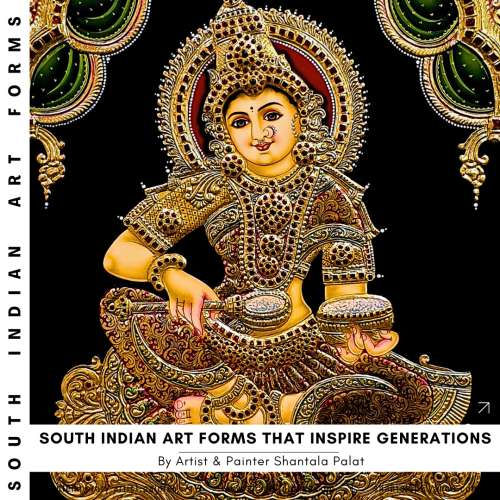
Tanjore Painting – Tamil Nadu
Tanjore paintings are globally recognized for their gold leaf work and jewel-like embellishments. These paintings mainly depict Hindu deities and are known for their rich texture and vibrant color palette. The embossed gold detailing gives the artwork a three-dimensional appearance, making it visually striking and spiritually symbolic.

Kerala Mural Painting – Kerala
Kerala mural paintings are created using natural pigments derived from minerals and plants. These artworks are commonly found on temple walls and showcase mythological scenes, divine figures, and spiritual narratives. The style is known for its vibrant hues, detailed expressions, and balanced composition.

Mysore Painting – Karnataka
Mysore paintings are distinguished by delicate line work, muted color tones, and detailed gesso work. Compared to other gold-based traditional paintings, this style appears softer and more refined. The paintings usually focus on devotional themes and classical aesthetics.

Kalamkari Art – Andhra Pradesh & Telangana
Kalamkari is a textile-based art created using freehand drawing or pen work on fabric. The art often narrates stories from ancient epics like the Ramayana and Mahabharata. Natural dyes made from plants and minerals are traditionally used, making the process eco-friendly and culturally authentic.

Pattachitra of Andhra Pradesh
Pattachitra is known for bold outlines and earthy color tones. Traditionally painted on cloth or treated palm leaves, this art form usually depicts mythological themes and religious narratives. The detailing and symmetry in design make it visually distinct.

Chitrakathi Art – Maharashtra Border & Southern Deccan Region
Chitrakathi art is known for storytelling panels painted on paper or cloth. Historically, traveling storytellers used these panels to narrate mythological and folk stories. The art style is bold, expressive, and narrative-driven.
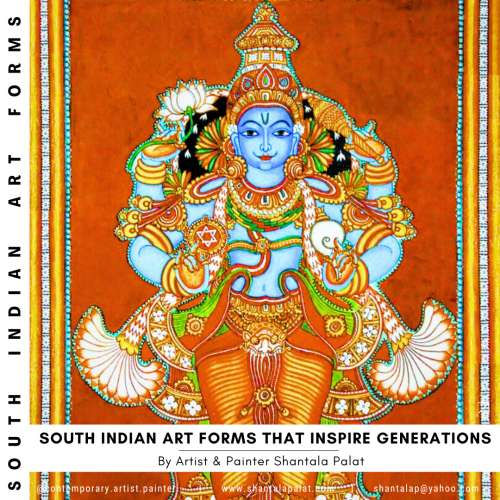
Vishnupuram Painting – Kerala
This style is known for subtle shading, devotional themes, and influence from temple mural traditions and devotional poetry. The artwork often focuses on spiritual storytelling through calm, balanced compositions.
South Indian art traditions represent centuries of cultural continuity, devotion, and storytelling. Each region has developed unique artistic identities while sharing common spiritual and narrative foundations. These art forms continue to inspire modern artists, designers, and cultural historians, proving that traditional creativity remains timeless and relevant across generations.


Comments