Top 5 Museums Worldwide That Display Digital Art
Summary
Digital art museums combine technology, motion, and immersive storytelling to create interactive experiences.
Museums like teamLab Borderless and ARTECHOUSE are globally recognised for innovative digital installations.
These museums are shaping the future of modern art through AI, projection mapping, and immersive design.
Digital art museums are changing the way people experience creativity by blending technology, projection mapping, artificial intelligence, sound, and immersive storytelling into one artistic environment. Unlike traditional museums that focus only on paintings or sculptures, digital art spaces allow visitors to interact with moving visuals, walk through installations, and become part of the artwork itself. Around the world, several museums have gained international recognition for creating unforgettable immersive digital art experiences.
Which Are the Top Museums Worldwide Known for Digital Art?
Here are some of the top museums worldwide, as shared by India’s leading contemporary artist and painter, Shantala Palat.

teamLab Borderless – Tokyo, Japan
teamLab Borderless is one of the world’s most famous immersive digital art museums. Created by the Japanese art collective teamLab, the museum features interactive installations where artworks move freely between rooms and respond to visitor movement. The experience combines light, motion, sound, and technology to create a constantly evolving artistic environment.

ARTECHOUSE – United States
ARTECHOUSE is known for combining science, technology, and contemporary digital creativity. The museum showcases immersive exhibitions featuring projection mapping, artificial intelligence, and sensory storytelling. Its futuristic installations attract visitors looking for modern and technology-driven artistic experiences.
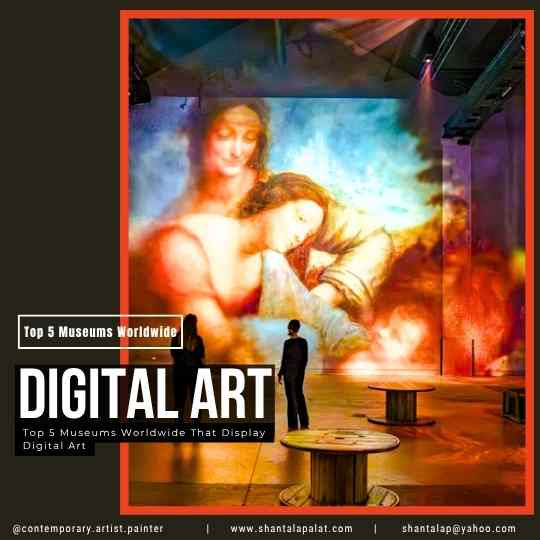
Atelier des Lumières – Paris, France
Located inside a former industrial foundry, Atelier des Lumières is famous for its large-scale digital projections of classical artwork. Paintings by legendary artists are transformed into immersive visual experiences using animated projections and synchronised music. The museum has become one of Europe’s leading destinations for digital art exhibitions.

Ars Electronica Center – Linz, Austria
Often called the “Museum of the Future,” Ars Electronica Center explores the relationship between technology, artificial intelligence, robotics, and digital art. The museum focuses on innovation and interactive media, offering visitors an educational and immersive experience that blends creativity with science.

Meow Wolf – United States
Meow Wolf combines immersive storytelling with digital installations, sound effects, hidden spaces, and surreal visual environments. Visitors move through interactive artistic worlds filled with multimedia experiences that blur the line between art, entertainment, and technology.

Why Are Digital Art Museums Becoming So Popular?
Digital art museums provide experiences that go beyond traditional viewing. Visitors become active participants through motion, sound, interaction, and immersive environments. These museums are especially popular among younger audiences because they combine creativity with technology while offering visually engaging experiences that are both memorable and shareable.
As technology continues to evolve, digital art museums are expected to become even more advanced through virtual reality, artificial intelligence, holographic displays, and interactive storytelling. These museums represent the future of modern artistic expression by transforming how people connect with creativity and culture.


Comments