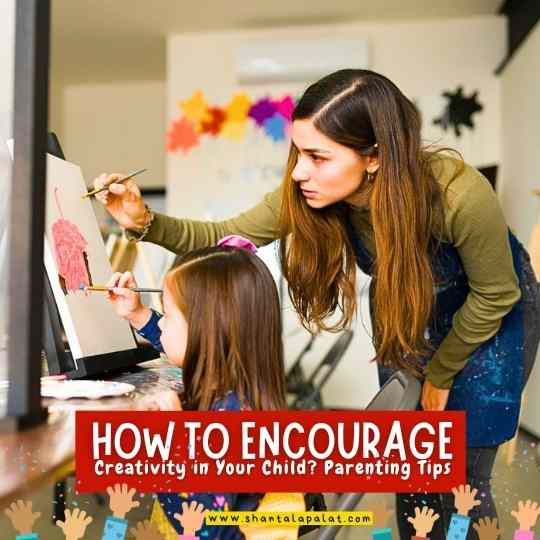
How to Encourage Creativity in Your Child? Parenting Tips
Parenting Tips: Direct Answer Summary
Encourage imaginative play with simple, everyday materials.
Ask open-ended questions and welcome original ideas.
Praise effort and curiosity rather than perfection.
Every child has a natural ability to imagine, explore, and discover new possibilities. Whether they are drawing unusual pictures, building towers with blocks, inventing stories, or asking endless questions, these everyday activities are opportunities for creative growth. Creativity is not limited to art or music. It also helps children develop problem-solving skills, express emotions, think independently, and approach challenges with confidence.
Parents play an important role in nurturing these abilities. Rather than expecting children to produce perfect results, they can create an environment where curiosity, experimentation, and original ideas are encouraged. With simple activities and thoughtful parenting, creativity can become a natural part of a child's everyday life, shares Shantala Palat, an eminent contemporary artist in India.

Why Is Creativity Important for Children?
Creativity helps children look at situations from different perspectives and explore more than one possible solution. When children experiment with materials, invent games, or create stories, they learn to make decisions and develop their own ideas.
Creative activities can also support emotional development. A child who finds it difficult to explain a feeling may express it through drawing, music, pretend play, or storytelling. These experiences allow children to explore their emotions in a comfortable way.
Most importantly, encouraging creativity helps children understand that making mistakes is part of learning. They become more willing to experiment, ask questions, and try unfamiliar things.
“When parents give children the freedom to imagine, experiment, and make mistakes, they help build the confidence to think creatively and discover their own possibilities.” Says Shantala Palat, contemporary artist from Delhi.

How Can Parents Encourage Creativity at Home?
Parents do not need expensive toys or elaborate activities to encourage creative thinking. Everyday household objects can become tools for imagination.
Give children paper, crayons, cardboard boxes, building blocks, clay, or safe recycled materials and allow them to decide what to create. A cardboard box might become a spaceship, a shop, or a house depending on the child's imagination.
Avoid giving detailed instructions for every activity. Instead of showing children exactly what to make, let them experiment with their own designs. The process of creating something independently is often more valuable than the finished product.
Why Is Unstructured Play Important?
Children need time to play without every activity having a fixed goal. Unstructured play allows them to invent rules, explore interests, and follow their curiosity.
For example, during pretend play, a child might turn a living room into a restaurant or imagine that ordinary toys are characters in an adventure. Such activities encourage imagination, language development, decision-making, and social skills.
Parents can participate when invited, but they should avoid taking control of the game. Letting children lead gives them the freedom to explore their own ideas.
How Can Parents Develop Creative Thinking Through Questions?
The questions parents ask can influence how children approach problems. Instead of always providing immediate answers, encourage children to think about possibilities.
Ask questions such as, “What else could we use this for?”, “How would you solve this problem?” or “What do you think might happen next?” These prompts invite children to explore different answers rather than search for a single correct response.
When children share unusual ideas, listen with interest. Even if an idea seems impractical, asking them to explain their thinking can help them develop confidence and reasoning skills.
Should Parents Correct Their Child's Creative Work?
Not every drawing needs to look realistic, and not every story needs to follow a logical sequence. When parents constantly correct children's creative work, children may become more concerned about pleasing adults than expressing themselves.
Instead of saying that a picture should look different, ask the child to describe what they have made. Praise their effort, imagination, persistence, or willingness to try something new.
Constructive guidance is useful when children request help, but it is important to leave room for personal expression. Creativity develops when children feel comfortable exploring ideas without fearing criticism.
How Can Everyday Experiences Inspire Creativity?
New experiences give children fresh ideas to explore. Visiting a park, observing insects, helping prepare a meal, listening to different kinds of music, or reading an unfamiliar story can spark curiosity.
Parents can encourage children to notice details around them. Ask what they observed during a walk, invite them to invent a story about a cloud's shape, or let them suggest ways to organise their toys.
Reading together is particularly valuable because stories introduce children to new characters, settings, problems, and possibilities. Encourage them to imagine alternative endings or create their own characters inspired by what they have read.

How Can Parents Balance Screen Time and Creative Activities?
Digital devices can offer useful drawing tools, educational games, and storytelling activities. However, children also need opportunities to move, explore physical materials, interact with others, and create without a screen.
Parents can establish age-appropriate screen-time routines and make room for hands-on activities, outdoor play, reading, and imaginative games. The goal is not necessarily to eliminate technology but to maintain a healthy variety of experiences.
Encouraging creativity in children begins with giving them time, freedom, and opportunities to explore. Parents can nurture imagination by offering simple materials, encouraging unstructured play, asking open-ended questions, and appreciating effort rather than perfection. Most importantly, children need to feel that their ideas are valued, even when they are unusual or different from expectations.
Creativity grows when children are allowed to experiment, make mistakes, and discover possibilities at their own pace.


Comments